Written by participant Carolina Saula, Education Specialist.
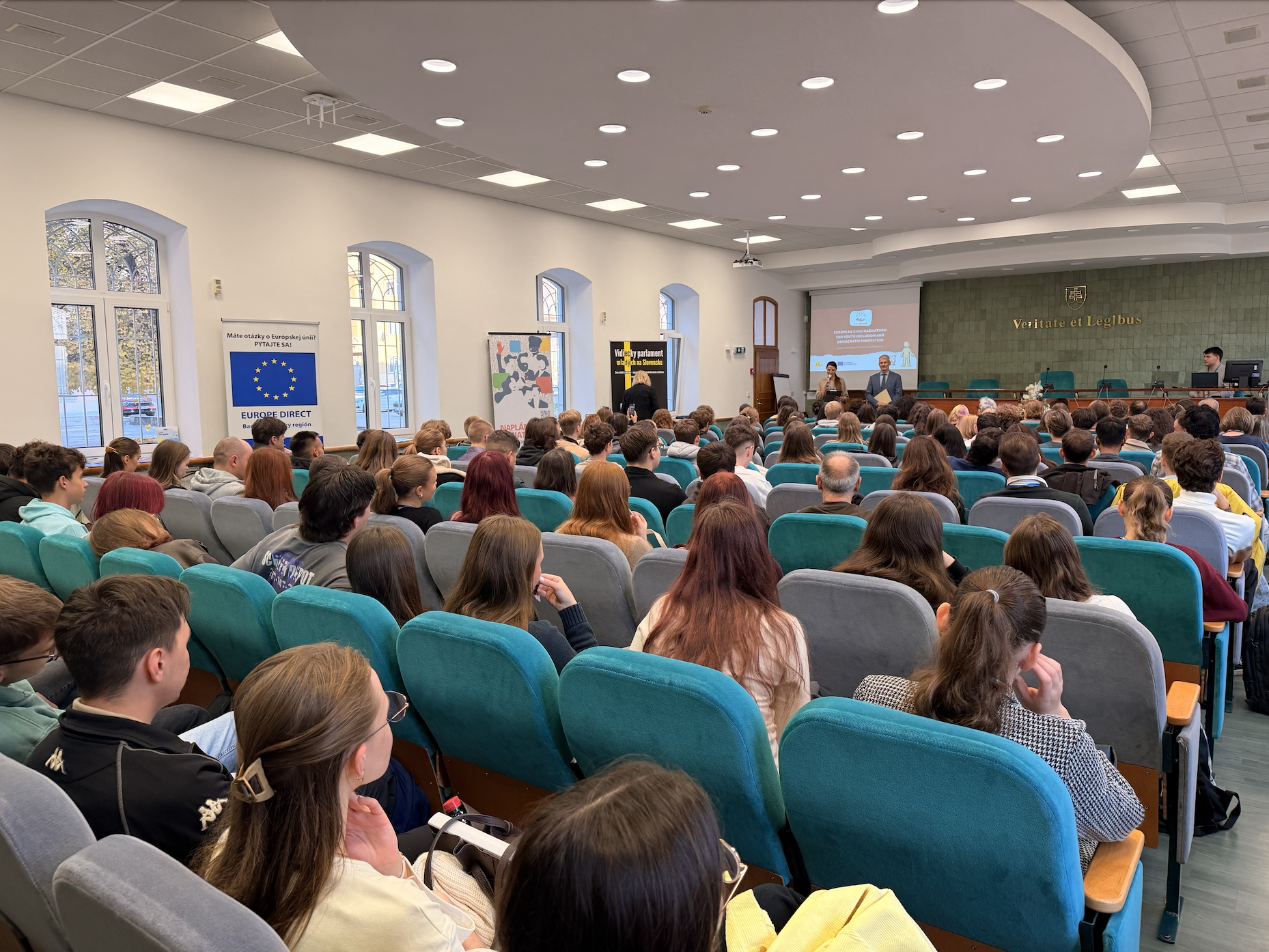
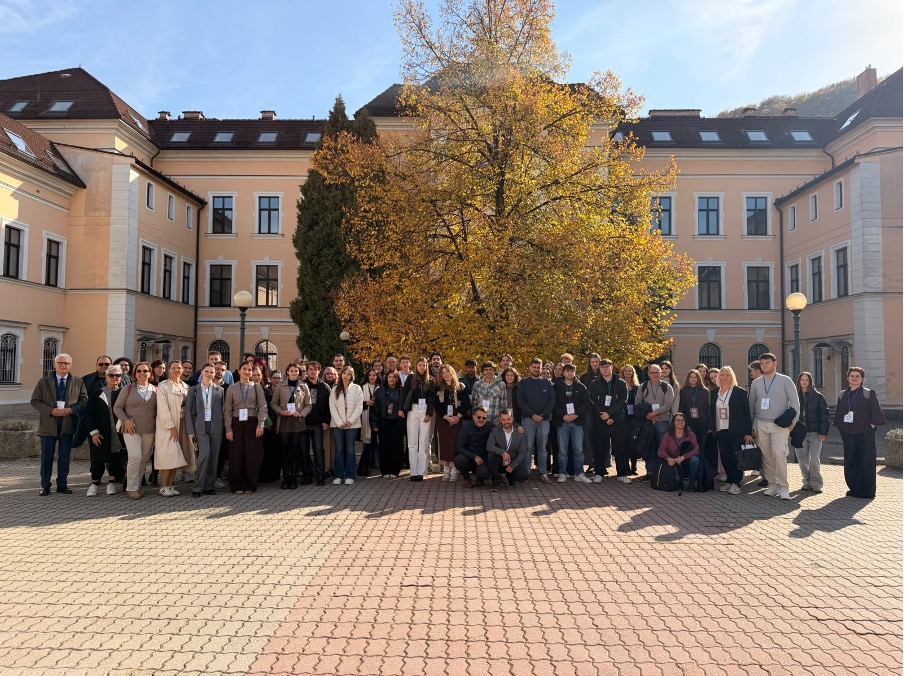
On October 21–22, Banská Bystrica, Slovakia, became a meeting point for young people and changemakers from different European countries. We gathered for the All On Board European Civic Hackathon for Youth Inclusion and Democratic Innovation. The event offered an opportunity to exchange perspectives and work across cultures while developing creative solutions around migrant inclusion, digital civic participation and participatory democracy. And I was lucky enough to participate thanks to Traces&Dreams, the Swedish partner of the project.
For me, as a Brazilian living in Sweden, the topic of inclusion has always felt particularly close to home. Knowing how important it is to feel that you belong and that your voice matters, I was especially excited to take part in this experience.
Starting with listening: A team of young voices
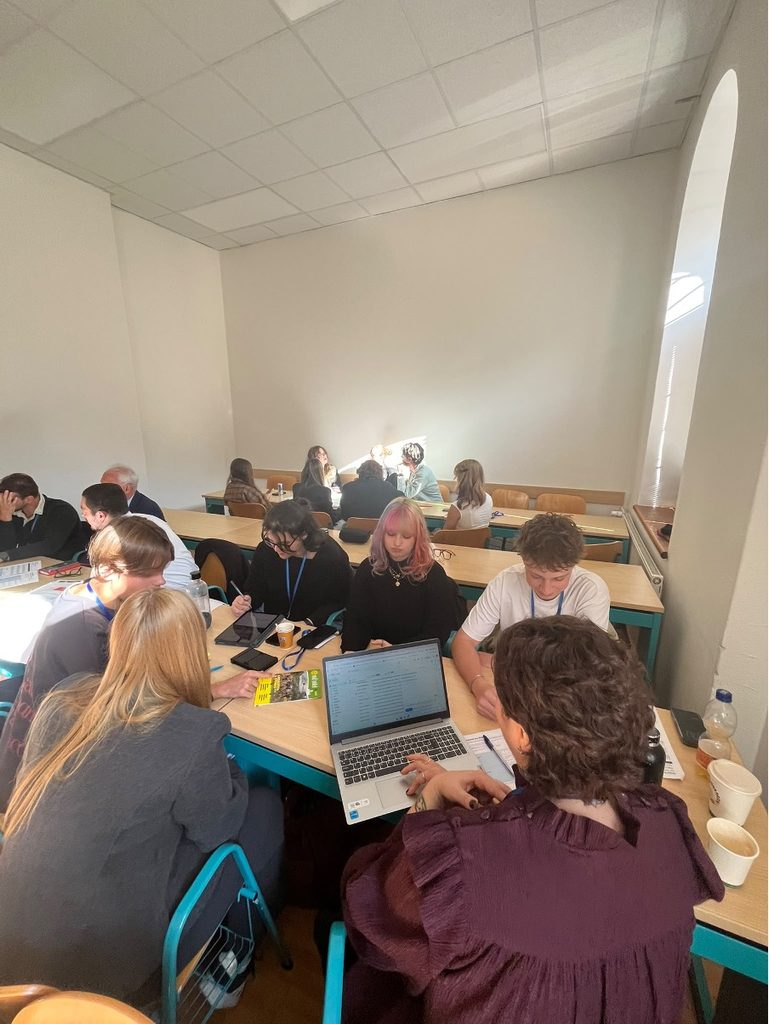
Before arriving in Slovakia, we had each selected the topic we wanted to work on. Once there, participants who had chosen the same topic were brought together into groups. I was excited to discover that most of my teammates were teenagers. I saw a great opportunity to hear directly from them about the challenges they face and the changes they would like to see.
Our group also included students from Ukraine, who brought their own experiences into the conversation. This made our discussions richer and reminded us that people can experience participation and belonging in very different, but also very similar, ways.
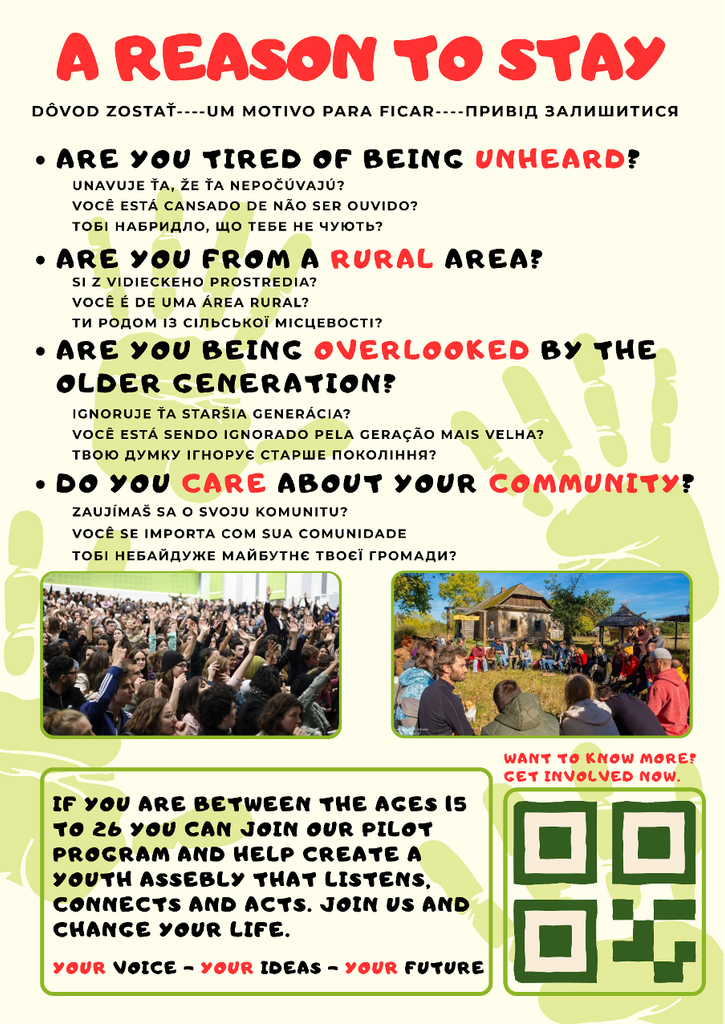
The name our group eventually chose, A Reason to Stay, was inspired by a social media movement. It reflected something that came up in our discussions about the situation of young people in Slovakia. Many young people consider leaving the country to study abroad because they feel that opportunities at home are limited. We also discussed the perceived divide between older and younger generations, and how different expectations and perspectives can leave young people feeling disconnected from the society around them.
The name captured an important question behind our project: What would make young people feel that they have a future worth staying for? What would make them feel that they can contribute to their communities and have a real influence on the decisions shaping their lives?
I took on the role of coordinator and mentor, but from the beginning, I wanted to make sure that the young people had the stage. My role was to listen and ask questions. I helped structure the discussions while supporting the group in turning their thoughts into something concrete. I wanted to create an environment where everyone felt comfortable contributing and where no idea was dismissed too quickly.
We started by discussing a fundamental question: Do young people really have opportunities to influence the decisions that affect their lives and communities?
As we exchanged experiences, we began identifying some recurring challenges, particularly for young people living in rural areas. We discussed how geographical isolation can make it difficult to access opportunities. We talked about the limited representation of young people in local decision-making and the distrust that some feel towards institutions. We also explored how young people who have never participated in civic activities might find it difficult to make their voices heard. Something became increasingly clear: young people don’t necessarily lack ideas or interest. Often, they simply lack accessible spaces where those ideas can be heard and taken seriously.
From theory to practice
As our conversations developed, we started connecting the different challenges and looking for a solution that could bring them together. Instead of creating another initiative that would only reach young people who were already active in student councils or youth organizations, we wanted to think about those who are often left out. What if young people from small villages could come together, share their experiences and collectively influence decisions in their communities? This question became the starting point for our proposal: A National Rural Youth Assembly.
Our idea was to create a nonpartisan, youth-led assembly connecting young people from rural communities across Slovakia. The initiative would give them a platform to express their concerns and develop proposals that could be presented directly to the institutions responsible for making decisions.
We imagined an initiative by young people, for young people.
The proposed assembly would allow participants to bring concerns from their villages into a shared space. They could discuss common challenges and work together to develop solutions. Through democratic discussions and voting, they would decide which proposals should be presented to local and regional authorities. An important part of our discussion was that participation should go beyond simply giving young people an opportunity to speak.
We wanted to create a pathway for their voices to actually reach decision-makers. We also wanted those decision-makers to respond, so that young people could see what happened to the ideas they had worked so hard to develop. We also came up with a creative exercise of which official roles the assembly would have; how a youngster diplomat or spokesperson would look like? I noticed that just by imagining that they could indeed have a more active participation and imagine a future where they would be respected and listened to was a valuable outcome by itself.
Building the project together
One of the most rewarding parts of the hackathon was seeing how our initial conversations gradually developed into a structured proposal. We each brought different experiences and perspectives. That diversity helped us look at the challenge from multiple angles. Rather than immediately agreeing on one solution, we explored the problem and questioned our assumptions. We discussed what would make our idea meaningful and, just as importantly, realistic.
We also looked at existing youth organizations and student representation structures in Slovakia. This helped us understand what was already being done and where our proposal could bring something different. We realized that the assembly should not compete with existing student councils or youth organizations. Instead, it could connect existing structures while creating additional opportunities for young people in villages that might not have established representation.
Together, we identified three principles that would make our idea distinctive.
Rural-first representation
We wanted to prioritize young people from villages and communities with fewer opportunities to participate in existing youth structures.
Discussion before decisions
We believed that meaningful democracy requires listening to different perspectives. Young people should have the opportunity to understand challenges and develop proposals together before voting.
Accountability
We didn’t want the assembly to become just another discussion forum. Our proposal included a mechanism for presenting ideas to decision-makers and following up on their responses. We also began imagining what the first pilot could look like. Our suggestion was to bring together 24 young people from six villages for a democratic assembly. They would discuss local challenges and vote on three proposals to present to the relevant authorities.
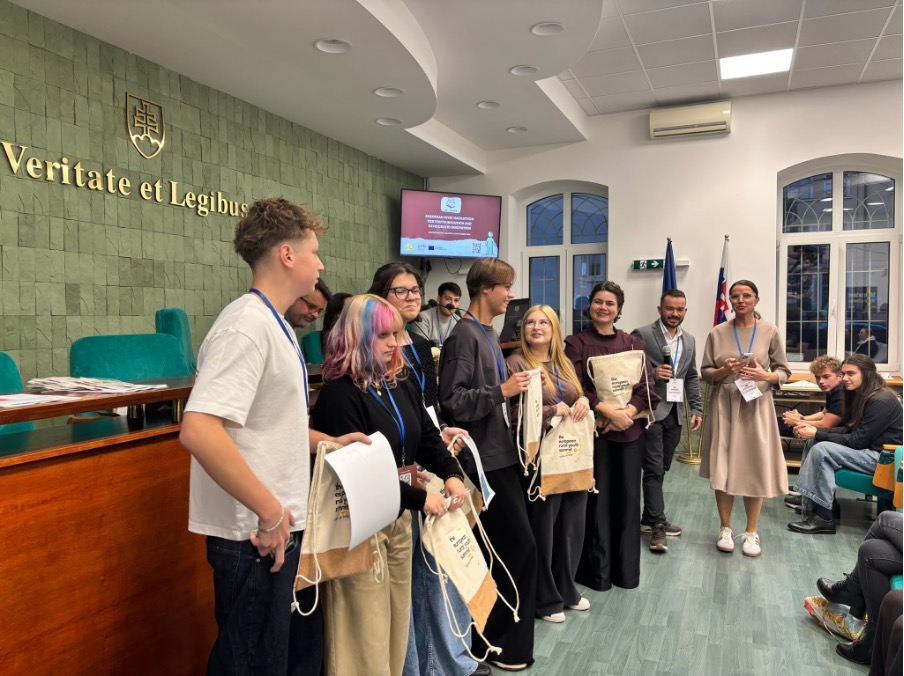
And WE WON!
When our group was announced as the winner, I couldn’t stop smiling on my way back to the student accommodation. I kept imagining how excited the students must have been to tell their families that they had just won a hackathon! And how special it must have felt to realize that their ideas had been taken seriously. That their opinions mattered. That their voices belonged in a room where young people are not always invited to speak. For me, that was perhaps the most meaningful part of the experience. Winning was wonderful, of course. But seeing a group of young people develop an idea together, believe in it and receive recognition for their work was even more rewarding.
As winners, the young people from A Reason to Stay will have the opportunity to participate in upcoming All On Board events in Poland and Croatia. This means they can continue developing their perspectives and bring their ideas into new international conversations. I’m particularly excited that the students will have the opportunity to continue this journey beyond the hackathon. I hope they will take the confidence they gained in Slovakia with them and keep discovering how much they can achieve.
About All On Board
The All On Board European Civic Hackathon for Youth Inclusion and Democratic Innovation brought together participants from different European countries in Banská Bystrica, Slovakia, on October 21–22. The event focused on developing creative approaches to migrant inclusion and democratic participation, encouraging intercultural collaboration and youth engagement.